
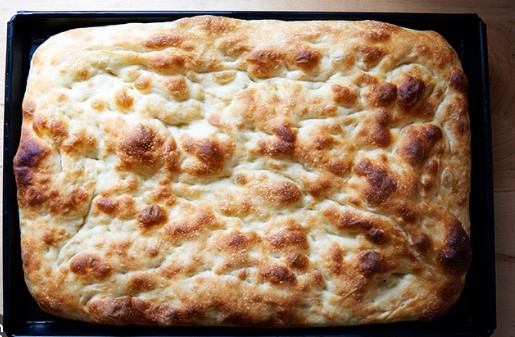
Discover the art of parbaking Sicilian Dough—a crucial step in achieving the perfect Sicilian-style pizza. With its distinct thick and airy crust, Sicilian pizza has captured the hearts of pizza lovers around the world. The parbaking technique involves partially baking the dough before adding the toppings, resulting in a crust that is both crisp and light. In this process, the dough is prepared, stretched, and allowed to rise, all while absorbing the flavors of quality olive oil. Unlock the secrets of parbaking, and elevate your pizza-making skills to new heights. Whether you prefer classic toppings or innovative combinations, this parbaked Sicilian Dough is sure to become a favorite in your kitchen.
INGREDIENTS:
- 1 (35-ounce/990-gram) ball Sicilian Dough
- ¼ cup (60 grams) olive oil, plus more for drizzling
PREPARATIONS:
- Remove the dough ball from the refrigerator and leave wrapped at room temperature until the dough warms to 50°F to 55°F. This should take 1 to 2 hours.
- Pour the olive oil into the center of a well-seasoned 12 by 18-inch steel Sicilian pan.
- The dough is very sticky, so the easiest way to remove it from the sheet pan is to hold the sheet pan upside down over the Sicilian pan and use a bowl scraper to release the dough, letting it fall into the pan. Using the bowl scraper, flip the dough over to coat both sides with the oil.
- Using flat, fully extended fingers of both hands, press the dough outward in all directions, extending it toward the corners to make an even layer. The dough may be stretched toward the corners. If you work gently, the dough should stretch without tearing. Don’t worry if the dough doesn’t reach the corners. Set, uncovered, in a warm spot and let rest for 30 minutes.
- After resting, the dough is ready to push outward a second time. It will not be degassed, so use a light touch to push the dough, rather than pulling it, repositioning it in the pan as needed to achieve an even thickness and to reach the corners.
- Let the dough rest again (still uncovered) for 1½ to 2 hours, until it has risen almost to the rim of the pan. The timing will depend on the temperature of the room. At this point, do not touch or press on the dough again, even if it has pulled away from the edges, or it may not rise properly.
YIELD:
- 1 (35-ounce/990-gram) ball of parbaked Sicilian Dough.
SPECIAL INSTRUCTIONS:
- The parbaked crust can be held for up to 10 hours. To keep it moist, wrap it in a large plastic bag and tie securely. Clean and reoil the pan before baking.
TIPS:
- For best results, use a well-seasoned steel Sicilian pan to prevent sticking and achieve an even bake.
Mastering the art of parbaking Sicilian Dough is a journey that opens the door to an array of delectable Sicilian-style pizzas. The combination of quality olive oil and a well-seasoned steel Sicilian pan gives rise to a crust that boasts both crispness and lightness, capturing the essence of traditional Sicilian pizza. As the dough is prepared, stretched, and allowed to rise, the flavors intensify, setting the stage for a delightful pizza-making experience.
The parbaking process sets the foundation for creativity. Whether you opt for a classic Brooklyn, Pepperoni and Sausage, Burratina di Margherita, Purple Potato and Pancetta, or La Regina pizza or embark on a culinary adventure with your own unique toppings, this parbaked Sicilian Dough provides a canvas for your creativity to shine. The thick crust, with its airy crumb, is perfect for supporting an array of savory and vibrant ingredients, ensuring every bite is a burst of flavor.
As the parbaked Sicilian Dough rests on the cooling rack, you’ll feel a sense of anticipation for the final baking stage. The crust, now partially baked and infused with the essence of olive oil, awaits the crowning touch of your favorite toppings. The process of assembling the pizza allows you to express your culinary vision, layering each element with care to create a symphony of tastes.
Upon placing the parbaked dough back into the steel Sicilian pan, your kitchen becomes a pizza haven, the aroma of the dough mingling with the scents of bubbling cheese and fresh vegetables. As the pizza bakes to a rich golden brown, you’ll know that you have achieved the perfect balance of flavors and textures.
In conclusion, parbaking Sicilian Dough is a transformative technique that elevates your pizza-making skills to new heights. With each parbaked crust, you embark on a journey that celebrates the heart and soul of Sicilian pizza-making. From the moment the dough warms to perfection to the final bake, every step in this process adds depth and character to your pizza creation. As you savor the fruits of your labor, sharing these delectable pizzas with loved ones, you’ll feel the joy of culinary craftsmanship and the delight of creating something truly special.
