
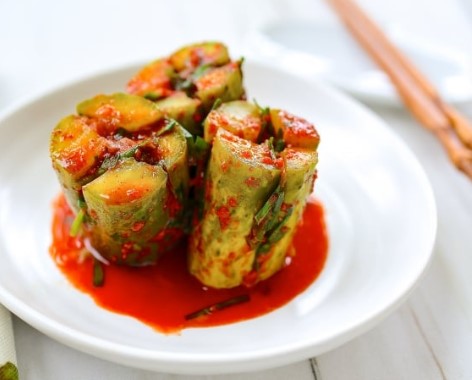
Stuffed Cucumber Kimchi, known as Oisobagi, is a delightful and refreshing variation of traditional kimchi. Its fresh and snappy texture makes it a favorite, especially when prepared during the summer when cucumbers are in season. The combination of flavors and spices creates a mouthwatering side dish that can be enjoyed the same day it’s made. This vegetarian-friendly and vegan-friendly kimchi is a fantastic addition to your Korean culinary repertoire, adding a burst of flavor and crunch to any meal. With a relatively short preparation time and minimal fermentation period, you can indulge in the deliciousness of Stuffed Cucumber Kimchi in no time. So, let’s dive into the recipe and savor the vibrant and tangy taste of this delightful kimchi!
INGREDIENTS
- 10 Korean, pickling, or kirby cucumbers, with the ends trimmed
- ¼ cup sea salt
- 4 garlic cloves, minced
- ½ cup gochugaru (Korean red pepper flakes)
- ½ cup Asian chives, cut into 1-inch pieces
- ⅓ cup fish sauce (omit for vegan/vegetarian version)
- ⅓ cup shredded carrots
- 2 tablespoons sugar
PREPARATIONS
- Stand one cucumber up on its end on the cutting board and slice down the middle vertically without cutting all the way through the end. Rotate the cucumber and make another vertical cut without going through the end, so that the second cut is perpendicular to the first. Repeat for the remaining 9 cucumbers.
- Fill a large bowl with water and add the salt. Stir to dissolve. Add the cut cucumbers in this salt bath and keep them submerged for 30 minutes. If necessary, weight them down with a plate so they remain covered with the salt bath.
- While the cucumbers are marinating, mix the garlic, gochugaru, chives, fish sauce (if using), carrots, and sugar together in a large bowl.
- When the cucumbers have marinated for 30 minutes, remove them from the salt bath. Do not rinse them. Stuff the seasoning mixture into each cucumber, filling the spaces between the connected spears. Do not rinse out the large bowl that held the seasoning mixture. Lay cucumbers down next to each other in an airtight glass container.
SPECIAL INSTRUCTIONS
- It’s essential to use thin-skinned cucumbers for pickling to ensure optimal flavor absorption during the fermentation process.
TIPS
- Adjust the amount of gochugaru to your preferred level of spiciness. For a milder kimchi, use less, and for a spicier kick, increase the amount.
- To make a vegan or vegetarian version of this kimchi, simply omit the fish sauce.
Stuffed Cucumber Kimchi, with its crisp and crunchy texture, offers a delightful twist to the classic Korean kimchi. This versatile side dish is a perfect accompaniment to any meal, providing a burst of flavor and a refreshing bite. As you master the art of kimchi-making, you’ll discover the joy of experimenting with different vegetables and seasonings to create unique variations of this beloved Korean delicacy.
With its relatively short preparation time and minimal fermentation period, Stuffed Cucumber Kimchi is an excellent choice for those eager to explore the world of kimchi without waiting for an extended period. The vibrant combination of garlic, gochugaru, and chives infuses the cucumbers with a tangy and zesty taste that pairs beautifully with a variety of dishes.
So, gather your ingredients, roll up your sleeves, and embark on a flavorful journey as you prepare Stuffed Cucumber Kimchi. From your first crunchy bite to the satisfaction of sharing this delectable treat with friends and family, you’ll come to appreciate the tradition, craftsmanship, and artistry that goes into every jar of kimchi.
In the world of Korean cuisine, kimchi is not just a side dish—it’s a way of life. Let the process of kimchi-making connect you with the rich cultural heritage of Korea, and allow your taste buds to revel in the deliciousness of this cherished culinary delight.
