
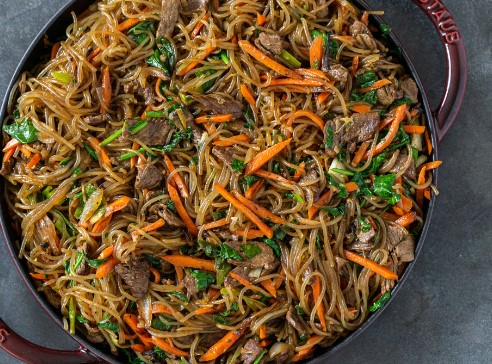
Japchae, also known as chapchae, holds a prominent place as one of Korea’s most beloved noodle dishes, captivating the taste buds of both locals and foreigners alike. The heart of this dish lies in the delightful blend of noodles, soy sauce, garlic, and sesame oil, which perfectly complements the sweet potato noodles, known for their ability to soak up flavors splendidly. Serves 4, this vegetarian-friendly recipe offers a tantalizing combination of textures and flavors, making it a delightful addition to any meal. With a preparation time of 30 minutes and a cooking time of 15 minutes, japchae is a quick and satisfying dish that is sure to leave a lasting impression on your palate.
INGREDIENTS:
- ½ pound baby spinach
- 2 tablespoons vegetable oil
- 1 tablespoon toasted sesame oil, plus ½ tablespoon
- 1 sweet onion, sliced into thin strips
- 2 garlic cloves, finely chopped
- 2 small carrots, julienned
- 3 scallions, chopped
- ½ cup chopped napa cabbage
- 5 shiitake mushrooms, rehydrated if dried, sliced
- 8 ounces mung bean noodles or sweet potato noodles (also called cellophane or glass noodles or Chinese vermicelli), cooked according to the package directions
- 6 ounces beef or pork (optional)
- 3 tablespoons soy sauce, plus more for seasoning
- 1 teaspoon sugar
- Salt
- Sesame seeds, for garnish (optional)
PREPARATIONS:
- In a medium saucepan of boiling water, blanch the spinach for about 20 seconds. Drain and gently squeeze with your hands to remove excess water.
- In a large skillet or wok over medium heat, heat the vegetable oil and 1 tablespoon sesame oil. Add the onion and garlic and stir-fry for about 1 minute.
- Add the spinach, carrots, scallions, cabbage, and mushrooms and cook until the vegetables are crisp-tender, 4 to 5 minutes.
- Turn the heat to low, and add the cooked noodles, meat (if using), soy sauce, sugar, and the remaining ½ tablespoon sesame oil. Stir to combine, and cook for another 2 minutes.
- Season with salt or more soy sauce, if needed.
- Serve among 4 plates. If using sesame seeds, add them after plating.
YIELD:
- Serves 4
SPECIAL INSTRUCTIONS:
- The traditional method involves cooking all the vegetables separately before adding them to the noodles.
TIPS:
- To add protein to the dish, thinly sliced brisket, Korean barbecued beef (bulgogi), rotisserie chicken chunks, strips of omelet, or fried tofu pieces work well as excellent additions.
Japchae, the tantalizing Korean stir-fried sweet potato noodles, has earned its reputation as a cherished noodle dish among Koreans and foreigners alike. The essence of japchae lies in the harmonious medley of flavors created by the combination of noodles, soy sauce, garlic, and sesame oil. This dish’s star ingredient, sweet potato noodles, is well-known for its remarkable ability to absorb and complement flavors, resulting in an unforgettable taste experience.
The vibrant array of vegetables, from blanched baby spinach to julienned carrots, chopped scallions, napa cabbage, and shiitake mushrooms, infuses japchae with a delightful mix of textures and nutrients. The tantalizing aroma of sesame oil and garlic wafts through the air as the vegetables are stir-fried to crisp-tender perfection, inviting anticipation for the final creation.
A quick and simple cooking process ensures that japchae can be prepared without hassle, making it a fantastic option for a satisfying weeknight dinner or a special occasion meal. The addition of meat, such as beef or pork, offers an extra layer of richness to the dish, adding to its versatility and appeal to various palates.
The finishing touch of sesame seeds, if used for garnish, elevates the dish’s presentation, adding a subtle nutty flavor and visual appeal. The option to customize the dish with protein variations, such as thinly sliced brisket, Korean barbecued beef (bulgogi), rotisserie chicken, omelet strips, or fried tofu, allows japchae to adapt to various dietary preferences.
Japchae’s appeal also lies in its vegetarian-friendly nature, making it an excellent choice for those seeking meatless options without compromising on taste. This flexibility to cater to different dietary choices has contributed to its widespread popularity, making japchae an international favorite among Korean cuisine enthusiasts.
In conclusion, japchae is a delightful and versatile dish that embodies the essence of Korean culinary traditions—flavorful, vibrant, and satisfying. The combination of sweet potato noodles, colorful vegetables, and savory seasonings creates a delightful harmony on the plate and a joyous symphony on the palate. Whether you savor it as a standalone meal or complement it with other Korean delicacies, japchae promises a memorable culinary adventure that celebrates the richness of Korean flavors.
