
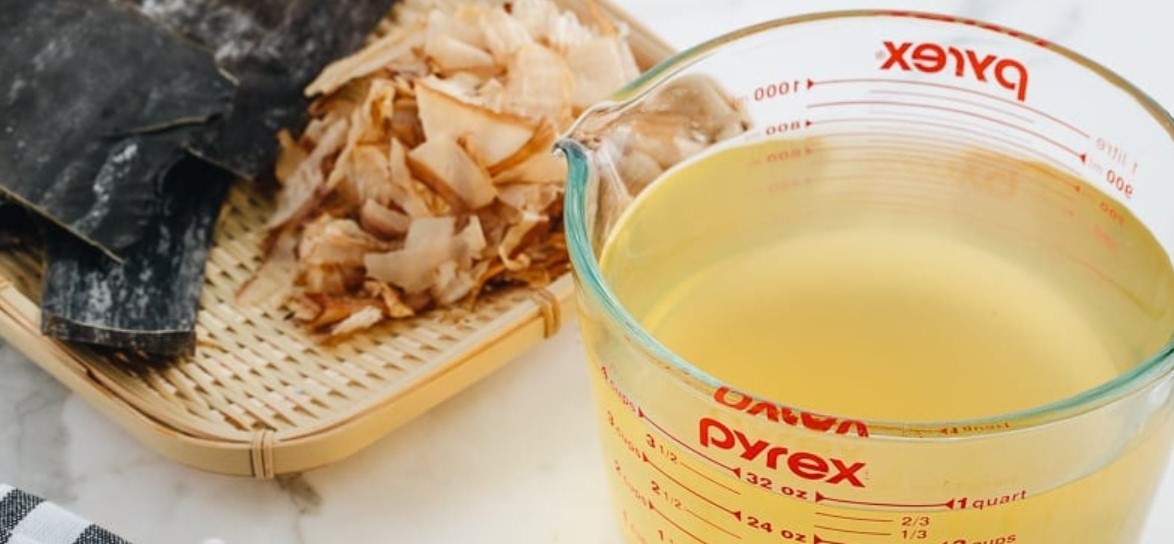
Dashi is a fundamental ingredient in Japanese cuisine, providing a distinct and savory flavor to a variety of dishes. This quick and easy stock is made using two key ingredients: dried kelp (kombu) and dried bonito flakes. While these ingredients may seem unfamiliar, they can be easily found in Japanese and Asian markets, as well as some major supermarkets. By following this simple recipe, you can create a flavorful dashi that will enhance the authenticity of your Japanese-inspired dishes. Let’s dive into the world of dashi and unlock its delicious potential.
Makes: 8 cups
Time: 15 minutes
INGREDIENTS:
- 1 piece dried kelp (kombu), 4 to 6 inches long
- 1/2 to 1 cup dried bonito flakes
- 8 cups water
INSTRUCTIONS:
- In a medium saucepan, combine the dried kelp and 8 cups of water over medium heat.
- Heat the mixture gently, ensuring that it does not come to a boil. As soon as it is about to boil, turn off the heat.
- Remove the kelp from the saucepan. You can reserve the kelp for other culinary uses, such as stir-fries or salads.
- Immediately add the dried bonito flakes to the saucepan and stir gently. Let the bonito flakes sit in the hot liquid for a couple of minutes.
- Strain the dashi through a fine-mesh sieve or cheesecloth to remove any residue or particles. The resulting liquid is your dashi stock.
- Use the dashi immediately in your recipes to infuse them with its unique umami flavor. Alternatively, you can refrigerate the dashi for up to 2 days, but it is best used as fresh as possible for optimal flavor.
TIPS FOR DASHI:
- Look for high-quality dried kelp and bonito flakes to ensure the best flavor in your dashi. These ingredients can be found in Japanese or Asian markets and may also be available in some major supermarkets.
- Avoid boiling the dashi to prevent a bitter taste. Heat the mixture just until it is about to boil and then immediately turn off the heat.
- Experiment with the amount of dried bonito flakes based on your preference for a stronger or milder flavor. Start with 1/2 cup and adjust to taste.
- Dashi is incredibly versatile and serves as a base for various Japanese dishes, including miso soup, noodle dishes, and simmered vegetables. It adds depth and complexity to your culinary creations.
- If you prefer a vegetarian version of dashi, omit the bonito flakes and add 2 or 3 nickel-sized pieces of ginger to the water while heating. This substitution creates a flavorful vegetarian dashi alternative.
Unleash the essence of Japanese cuisine with homemade dashi. Its delicate yet robust flavor will transport your taste buds to the heart of Japan. Use this versatile stock to elevate your miso soups, noodle dishes, and beyond. Embrace the simplicity and authenticity of dashi in your culinary adventures and savor the rich umami notes it brings to your dishes.
