
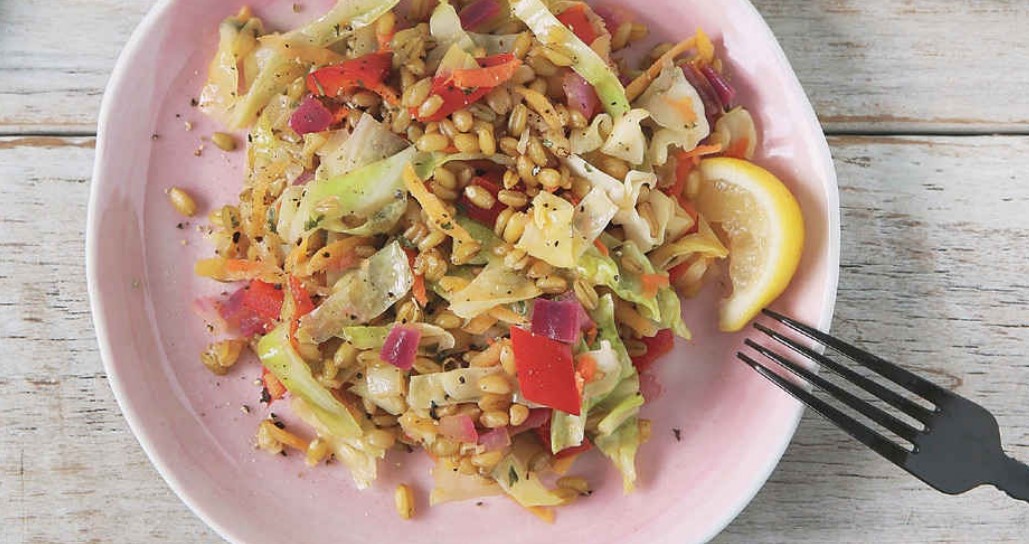
Cabbage Pilaf is a delightful and refreshing side dish that combines crisp vegetables with your choice of grain. We’ve used freekeh in this recipe, but you can easily substitute it with barley, einkorn, or kamut, depending on your preference. It’s a quick and easy dish that brings a burst of flavors to your meal.
YIELD: This recipe serves 4 as a side dish.
INGREDIENTS:
- 1 tablespoon (15 ml) olive oil
- 1/2 cup (80 g) chopped onion
- 1/3 cup (49 g) chopped red bell pepper
- 2 cups (154 g) chopped cabbage
- 1/2 cup (56 g) grated carrots
- 1/2 teaspoon dried herbes de Provence (see Recipe Note)
- 2 cups (336 g) cooked freekeh
- Juice from 1/2 lemon
- 1 tablespoon (3 g) minced fresh parsley
- Salt and pepper to taste
INSTTRUCTIONS:
- Heat the olive oil in a large skillet over medium heat.
- Add the chopped onion, red bell pepper, and cabbage to the skillet. Cook, stirring occasionally, for about 4 minutes or until the vegetables become soft.
- Stir in the grated carrots, herbes de Provence, and cooked freekeh. Continue to cook and stir until the mixture is heated throughout.
- Add the lemon juice and minced parsley to the skillet. Mix well to combine.
- Season the pilaf with salt and pepper according to your taste preferences.
RECIPE NOTE:
- Some herbes de Provence blends may contain lavender, which can be overpowering for some taste preferences. If you are sensitive to lavender, consider substituting with dried Italian seasoning for a milder flavor.
TIPS:
- Grain Substitutions: As mentioned in the introduction, you can easily substitute freekeh with other grains like barley, einkorn, or kamut to suit your taste and dietary preferences.
- Pre-cook the Grain: To save time, cook the freekeh or your chosen grain ahead of time and have it ready to use when making the cabbage pilaf.
- Customize Veggies: Feel free to customize the vegetables in the pilaf to your liking. You can add or replace ingredients like zucchini, peas, or broccoli to add more variety and color.
- Adjust Seasonings: The herbes de Provence blend may vary in intensity, so taste the pilaf as you add it and adjust the amount according to your preference. You can also experiment with other herb blends or individual herbs to tailor the flavors to your liking.
- Add Protein: To make this side dish more substantial, you can add protein sources like cooked chickpeas, tofu cubes, or roasted nuts for added texture and nutrition.
- Serve Fresh: Cabbage pilaf tastes best when served fresh and warm. However, you can store any leftovers in an airtight container in the refrigerator for up to 2-3 days.
- Pairing: This pilaf pairs well with a variety of main dishes, such as grilled tofu, roasted vegetables, or alongside your favorite plant-based protein.
- Garnish: Sprinkle some toasted sesame seeds or sliced green onions on top for an extra burst of flavor and visual appeal.
- Make it Spicy: If you enjoy heat, consider adding a pinch of red pepper flakes or a dash of hot sauce to give the pilaf a spicy kick.
- Double the Recipe: This dish is versatile and great for meal prep. Consider doubling the recipe to have delicious leftovers for quick and easy lunches during the week.
