
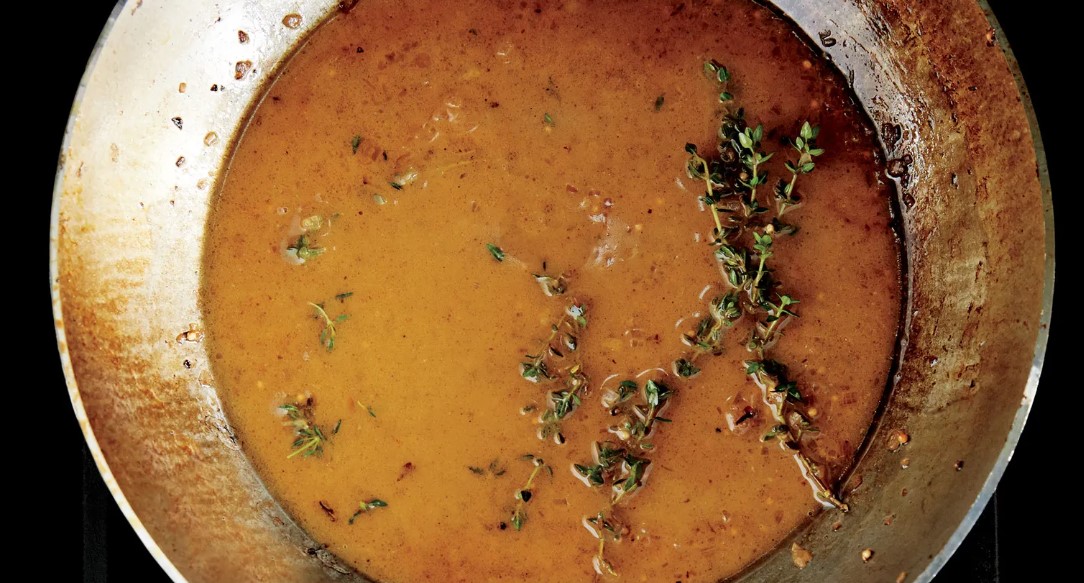
This is the standard gravy for turkey or meatloaf, again starting with the browned bits left in your pan from cooking meat. This version is easy, fast, and lump-free. Stir in 1/4 cup or more of heavy cream just before serving if you want a creamier, richer-tasting sauce. For more about ways to thicken any cooked sauce, see “4 Ways to Thicken a Sauce,” which follows.
MAKES: 2 cups
TIME: 20 minutes
INGREDIENTS:
- 1 cup dry white wine
- 1/2 cup chopped onion
- 3 cups plus 3 or 4 tablespoons chicken, beef, or vegetable stock (to make your own, see pages 157–159) or water
- 1/2 cup minced giblets or other meat, or more to taste (optional)
- 2 tablespoons cornstarch, or a bit more as needed
- Salt and freshly ground black pepper
INSTRUCTIONS:
- Spoon off all but 1 or 2 tablespoons of the cooking fat (if there are dark, nonfatty juices in the skillet or roasting pan, leave them in there). Add the wine and onion and turn the heat under the pan to high. Cook, stirring and scraping, until most of the wine has evaporated, the onion is soft, and the bottom of the pan is clean, about 5 minutes.
- Add 3 cups stock and continue to cook, stirring, until reduced by about half, 5 to 10 minutes. If you have any solids—like giblets—add them and turn the heat down to low.
- Combine the remaining stock with the cornstarch and stir it into the liquid; it will begin to thicken almost immediately.
- Cook, stirring, for about 5 minutes; season with salt and pepper to taste. If the sauce is not as thick as you’d like, combine another tablespoon of cornstarch with 1 tablespoon water or stock and add it to the mixture.
- Cook for another 5 minutes and serve.
4 WAYSTO THICKEN A SAUCE:
I’ve got the same attitude about thickening sauces as I do about thickening soups: If you want them thicker—and sometimes you do—use less liquid or cook them a little longer. Here are some other ways you can add body and sheen to many of the cooked sauces.
- Puréeing: Chunky sauces turn smooth and luxurious when puréed. An upright blender will give you the best results (always cool food to a safe temperature before putting it in a blender); an immersion blender is easier but not as powerful. A food processor or food mill will give you a little rougher texture.
- Enriching: Adding cream, sour cream, yogurt, egg yolks, or small bits of very cold butter will add body to cooked sauces. But beware of excess heat: Cream and butter are relatively stable even if the sauce bubbles a bit, but boiling will curdle sauces made with yogurt or eggs. (Eggs are best tempered before being added to sauces: Stir a bit of the hot sauce into beaten eggs to warm them, then stir that mixture back into the sauce.)
- Starting with a Roux: To make a roux, cook butter or oil and flour together in equal proportion, constantly stirring over medium heat, until the flour begins to toast. (The darker you cook the roux, the deeper and nuttier the flavor; just be careful not to let it burn.) You can cook the roux first and then whisk in a liquid like stock or milk (this is the technique used in Béchamel, page 57); or you may add the cooked roux to an already simmering sauce. Either way, let the mixture cook for a few minutes to thicken fully.
- Adding Cornstarch: When you dissolve cornstarch (you can use other starches, but this is the most common) in water, or a bit of the sauce you want to thicken, the result is a cloudy mixture known as a slurry, and it works brilliantly. A general formula is 1 tablespoon cornstarch dissolved in 1/2 cup of liquid to thicken 2 to 4 cups of sauce. Whisk it smooth with a fork or spoon, then incorporate it into the sauce, which will thicken and get shiny as it is gently heated.
